


Domestic & Cross-Border
Overview of Domestic vs. Cross-Border Logistics
Domestic Logistics
Operates within one country's borders
Governed by national regulations only
Faster transit times (typically 1-5 days)
Lower costs (no customs duties/tariffs)
Simpler documentation (no export/import paperwork)
Cross-Border Logistics
Moves goods between countries
Must comply with international trade laws
Longer lead times (5-30+ days)
Higher costs (tariffs, customs fees)
Complex documentation (certificates, customs forms)
Key Processes Compared
| Stage | Domestic | Cross-Border |
|---|---|---|
| Documentation | Commercial invoice, packing list | + Certificates of Origin, export/import licenses |
| Regulations | National transport laws | International trade agreements, customs compliance |
| Taxes/Fees | Local VAT/sales tax | Customs duties, VAT, possible anti-dumping fees |
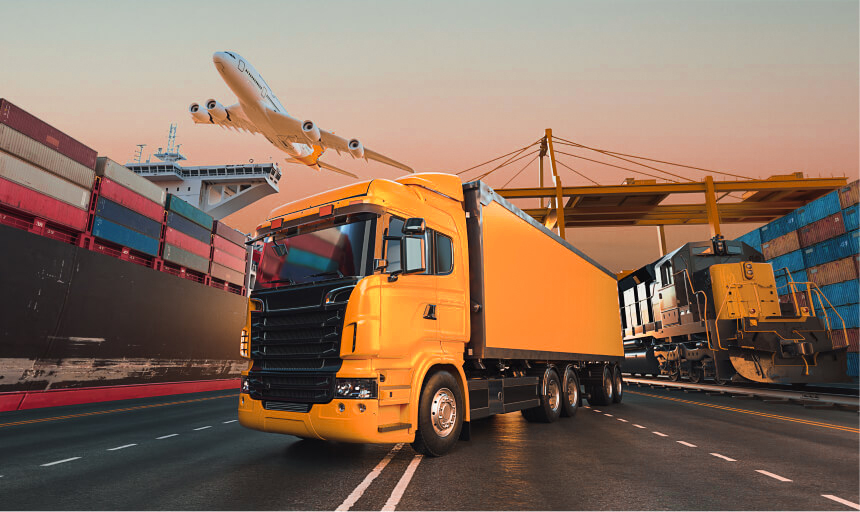
| Shipping Options | Standard truck/rail | Air freight, ocean shipping, intermodal transport |
| Risk Factors | Local delays, weather | Customs holds, currency fluctuations, political risks |
Domestic Logistics Deep Dive
Primary Transportation Modes
Road (80%+ of shipments): LTL/FTL trucks, vans
Rail: Cost-effective for heavy/bulk goods
Air: Emergency high-value shipments
Inland Waterways: For bulk commodities near rivers
Best Practices
Route optimization using GPS tracking
Consolidation centers to reduce empty miles
Real-time tracking for customer visibility
Returns management networks
Cross-Border Logistics Deep Dive
Critical Components
1. Customs Compliance
HS code classification
Duty calculation
Restricted/prohibited items awareness
2. International Shipping Methods
Ocean freight (most economical for large volumes)
Air freight (urgent/time-sensitive goods)
Land bridges (rail/truck combinations)
Cross-border trucking (NAFTA/USMCA regions)
3. Trade Agreements Impact
Reduced tariffs under agreements like:
- USMCA (North America)
- RCEP (Asia-Pacific)
- AfCFTA (Africa)
Technology Solutions
For Both Modes
Transportation Management Systems (TMS)
Warehouse Management Systems (WMS)
Electronic Proof of Delivery (ePOD)
Cross-Border Specific
Automated customs clearance platforms
Global trade management software
Currency conversion tools
Actionable Recommendations
For Domestic Shipments
Implement regional fulfillment centers
Negotiate volume discounts with carriers
Develop contingency plans for local disruptions
For Cross-Border Shipments
Conduct landed cost analysis before shipping
Build relationships with local customs brokers
Consider foreign trade zones for duty savings
Need help optimizing your domestic or international supply chain? Our logistics experts can analyze your specific needs and recommend the most cost-effective solutions. [Contact us] today for a free consultation.
